
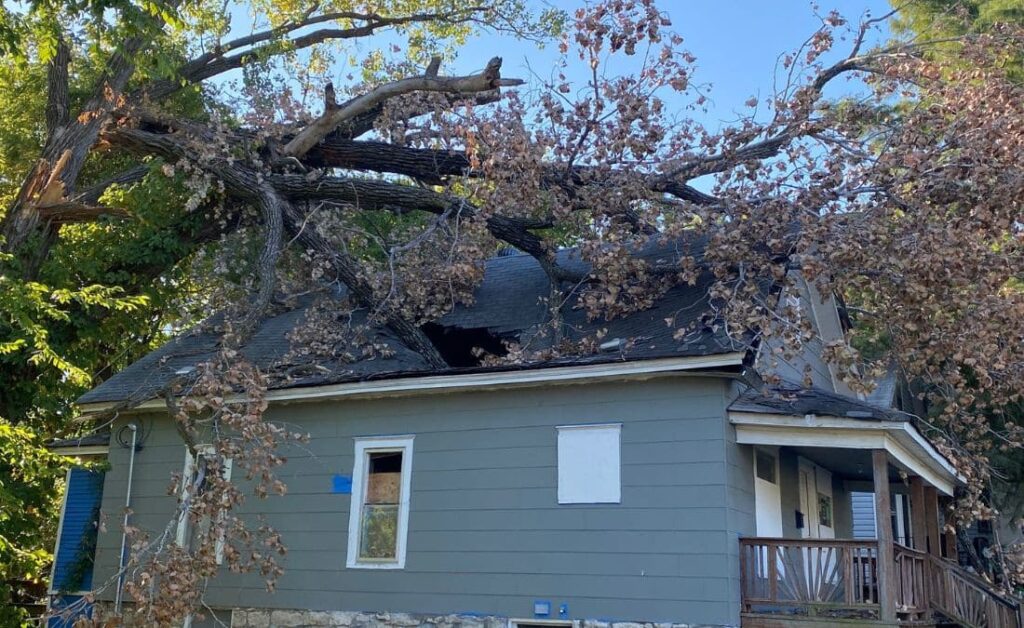
Trees are a beautiful and valuable part of any property, but during severe weather, they can quickly become a serious hazard. High winds, heavy rain, lightning, and saturated soil can weaken trees and cause branches or entire trees to fall onto roofs, vehicles, power lines, and other structures.
Tree damage can lead to more than just a fallen tree. A damaged roof can allow water to enter your home, resulting in structural damage, ruined belongings, and potentially mold growth if the water is not addressed quickly.
Fortunately, there are steps homeowners and property owners can take to reduce the risk of tree-related damage and prepare for the possibility of severe weather.
How Trees Can Damage Your Property
- Roof damage: Falling branches or trees can puncture shingles, damage decking, or cause significant structural damage.
- Water damage: A damaged roof can allow rainwater to enter your home or business.
- Siding and exterior damage: Falling limbs can damage siding, windows, gutters, doors, and other exterior features.
- Vehicle damage: Trees and branches can fall onto vehicles parked outside.
- Power line damage: Fallen trees can bring down electrical lines, creating dangerous conditions and potentially causing power outages.
- Landscape and structural damage: Falling trees can damage fences, sheds, decks, driveways, and other structures.
How to Prevent Tree Damage
1. Inspect Your Trees Regularly
Look for signs that a tree may be unhealthy or unstable. Dead branches, cracks in the trunk, leaning trees, exposed roots, and areas of decay can all indicate potential problems.
If you notice a tree that appears unstable, consider having it evaluated by a qualified tree professional before severe weather arrives.
2. Trim Dead or Weak Branches
Dead and weakened branches are more likely to break during high winds. Regularly trimming problem branches can help reduce the amount of debris that could fall onto your home or other structures.
Large or high branches should be handled by a qualified professional rather than attempting to remove them yourself.
3. Pay Attention to Tree Location
Trees growing close to your home, garage, driveway, or power lines deserve particular attention. A large tree that is leaning toward a structure can pose a significant risk if it falls.
When planting new trees, consider their mature size and keep them at an appropriate distance from buildings and other structures.
4. Watch for Signs of Tree Disease or Decay
Diseased or decaying trees can become structurally weak even when they appear healthy from a distance. Mushrooms growing near the base, cavities in the trunk, peeling bark, dead sections, and unusual growth can be warning signs.
If you are unsure about the health of a tree, have it inspected by an arborist.
5. Keep Gutters and Roof Areas Clear
After trimming trees, make sure leaves and branches are removed from your roof and gutters. Keeping these areas clear helps prevent drainage problems and allows you to spot potential roof damage more easily.
It is also a good idea to inspect your roof periodically for missing or damaged shingles.
What to Do If a Tree Falls on Your Property
If a tree falls during a storm, safety should be your first priority. Stay away from downed power lines. A fallen tree may have pulled electrical lines down with it, even if they are difficult to see. Keep people and pets away from the area and contact the appropriate utility company or emergency services if necessary.
Once the area is safe, document the damage with photographs and contact your insurance company to begin the claims process. If the tree has damaged your roof or another part of the building, temporary measures may be necessary to prevent additional water from entering the property. Contact a qualified restoration professional as soon as possible to assess the damage and begin emergency mitigation.
Why Fast Action Matters After Tree Damage
A fallen tree can leave your property exposed to the elements. Even a relatively small opening in a roof can allow significant amounts of rainwater to enter during a storm.
The longer water remains inside a property, the greater the potential for additional damage. Wet drywall, flooring, insulation, and other materials may need to be removed or dried quickly to help prevent further problems, including mold growth.
Professional restoration teams can help with water extraction, structural drying, cleanup, and repairs following storm-related damage.
Protect Your Property Before the Next Storm
You cannot prevent every tree-related accident, but routine tree maintenance and preparation can significantly reduce your risk. Inspect your trees, address dead or unstable branches, and consider having questionable trees evaluated by a professional.
And if severe weather does cause a tree to fall onto your home or business, act quickly to protect the property from additional damage.
At Emergency Restoration Xperts (ERX), we help property owners respond to the aftermath of storms, including water and structural damage. When your property has been damaged, getting professional help quickly can make a major difference in limiting further damage and getting your home or business back to normal.
When disaster strikes, call an xpert.