
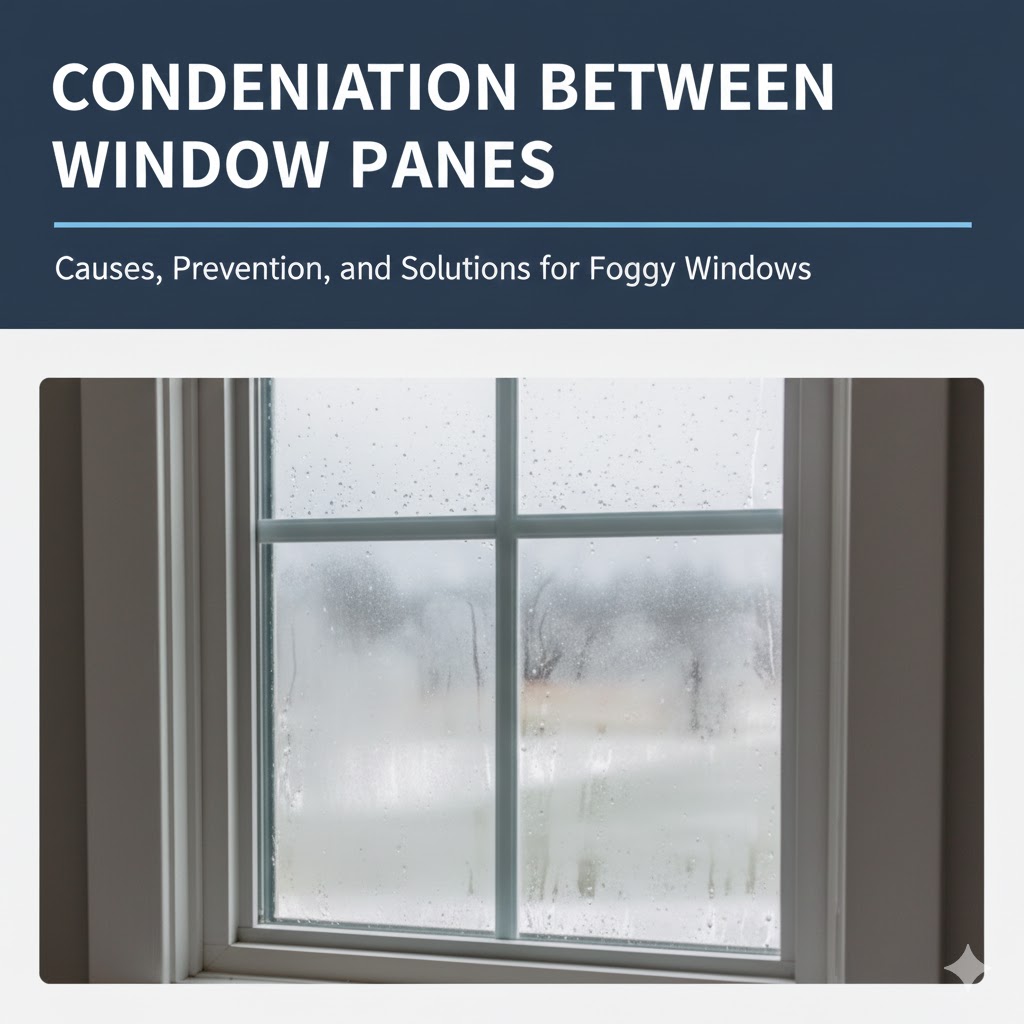
Condensation between window panes. Now what? You’re looking out your window, but everything looks blurry. You try to wipe the glass, but the rag doesn’t touch the moisture. That’s because the fog is trapped inside the window unit. It’s a common sight in local homes, especially when the temperature drops at night, but don’t just assume it’s a “weather thing.”
When you see condensation between window panes, you’re looking at a dead window. Modern windows are built as IGU, Integrated Glass Units. They have two or three layers of glass with a vacuum-sealed space in the middle, usually filled with an insulating gas like argon. When that seal snaps, the gas escapes and moist air rushes in. That’s when condensation between window panes is likely to happen.
It might seem like a minor annoyance, but that trapped moisture is a ticking bomb. If you ignore it, you’re basically inviting mold to grow in your window frame and rot to set into your wall studs. By the time you notice the fog, the structural integrity of your window frame is already under threat. Noticing condensation between window panes can be the difference maker!
The “Why” Behind the Fog
Understanding Condensation Between Window Panes
Windows fail for a few reasons, but it usually comes down to sunlight During the day, the sun hits the window and the air inside expands, putting pressure on the seals. At night, it cools and shrinks. Over five or ten years, this constant breathing eventually creates a tiny crack in the perimeter seal. This makes looking out for condensation between window panes difficult for the average homeowner.
Once that seal is compromised, the desiccant, the material inside the spacer bar that absorbs moisture. It’s like a sponge that can’t hold another drop. That’s when the “fog” becomes permanent.
What You Need To Do Right Now
✔ Don’t ignore the wood. If you have wood frames, check the bottom corners. If water is sitting inside the glass, it’s likely seeping into the sash. If the wood feels soft or looks dark, you have rot starting.
✔ Check your drainage. Most windows have “weep holes” on the outside of the frame. If these are clogged with dirt or paint, water can’t escape. It backs up, sits against the seal, and eats it away. Clear them out with a thin wire.
✔ Look for the source. Sometimes a shut-off valve leak or a damp crawlspace increases the humidity in your house so much that it accelerates window failure. If your whole house feels “sticky,” the condensation between window panes is the first sign of weakness.
✔ Assess the damage. Take a flashlight and look for white, powdery deposits on the glass inside the panes. That’s calcium. Once those deposits “etch” into the glass, the window can’t be saved by a simple repair; you’ll need a full IGU replacement.
🚨 Pro Tip: The “Thermal Trap”
Here is something most window salesmen won’t tell you: if you have heavy, light-blocking curtains closed all day, you might be killing your windows. Those curtains trap heat against the glass, making that “solar pumping” effect much more violent. If your windows are already old, try to give them some breathing room during peak sun hours to prevent the seals from popping.
Why You Can’t Just Drill a Hole
You might see “DIY” videos online suggesting you drill a tiny hole in the glass to let the moisture out. Don’t do it. You might get rid of the fog for a week, but you’ve permanently destroyed the insulating value of the window. Your AC will run twice as hard, and you’ll see it on your electric bill. Plus, you’re leaving an open door for mold to grow inside the wall cavity where you can’t see it.
At ERX, we see the aftermath of “minor” window leaks. It’s rarely just about the glass. Water travels. A failed window seal can let water drip down inside the wall, soaking the insulation and the headers. By the time the drywall feels soft, you’re looking at a full mitigation project.
The ERX Difference
We don’t just look at the surface. We use thermal cameras to see if that window leak has turned into a hidden mold colony inside your wall or condensation between window panes. If your window failure was caused by a storm or an “impact event,” we can help you navigate the insurance claim process to make sure the structural repairs are covered.
We’re here 24/7. Give us a call at 866-217-7903
FAQ
Is condensation between window panes an emergency? If it’s just fog, no. But if you see standing water or “puddles” at the bottom of the glass, yes. That water is migrating into your wall. If you leave it, you’ll be replacing more than just a window; you’ll be replacing rotted studs and moldy insulation.
Can I just reseal the window myself? Not really. Once the argon gas is gone and the inner desiccant is wet, the unit is spent. You can’t “reseal” it in your driveway. You have to replace the glass unit itself (the IGU), though you can usually keep the original frame if the rot hasn’t set in yet.
Does insurance cover foggy windows? Usually, no. Insurance covers “sudden and accidental” damage. A window seal wearing out over ten years is considered maintenance. However, if a hailstorm or a fallen branch cracked the frame and caused the seal to fail, that’s a different story. We can help you document the damage to see if your claim holds water.