
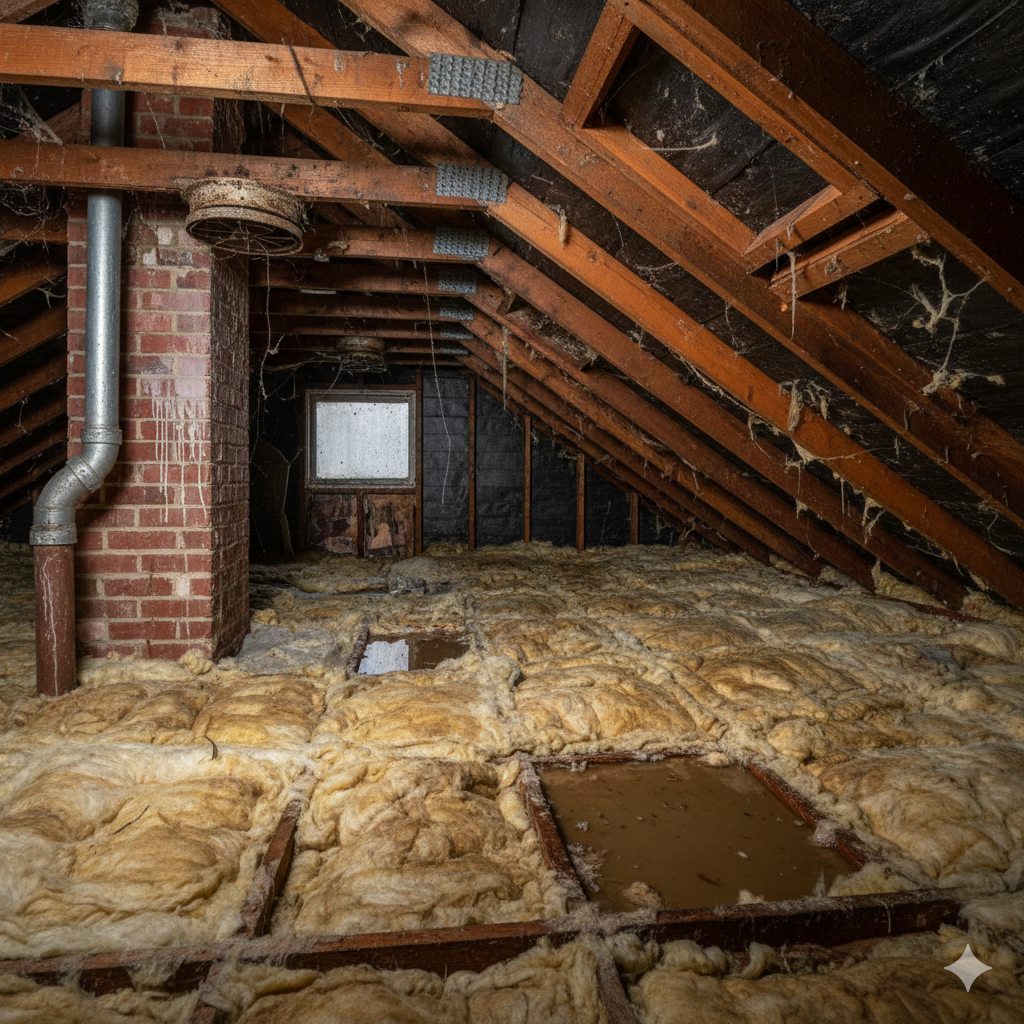
Signs of moisture in attic is every homeowner’s nightmare. Most people don’t realize they have a problem until the damage has already infected the living spaces below. If you’ve noticed a weird smell or a spot on your ceiling, you aren’t just looking at a “leak”—you’re looking at a ticking clock for mold growth and structural rot. Be aware of the signs of moisture in attic that can lead to these issues.
At ERX (Emergency Restoration Xperts), we see it all the time: a $500 minor repair that turns into a $15,000 full-scale remediation because the signs were ignored for just one season. Recognizing the signs of moisture in attic early can save you significant repair costs and prevent health risks associated with mold.
The Hidden Red Flags: Signs of Moisture in Attic
Attics are designed to be dry, high air flow environments. If yours feels like a sauna or looks like a cave, something is wrong. Here are the primary indicators that your attic is holding onto moisture:
- Dark Stains or Discoloration: Look at the underside of your roof decking (the wood panels). If you see dark streaks or “tide marks,” water is seeping through your shingles or underlayment.
- The “Musty” Funk: If you open your attic hatch and get hit with a wall of damp, earthy air, you likely have active microbial growth.
- Rusty Nails and Fasteners: In a healthy attic, the nails should look gray or silver. If the tips of the nails poking through the roof are orange or rusted, the humidity levels are high enough to cause metal oxidation.
- Compressed or Wet Insulation: Check your floor-level insulation. If it looks matted, flat, or feels damp to the touch, its R-value (insulating power) is gone, and it’s likely trapping water against your ceiling joists.
- Frost in Winter: If you live in a colder climate, moisture can actually freeze on the underside of your roof, looking like a light dusting of snow. When it warms up, that “attic rain” falls directly into your home.
The Real Cost of Ignoring Attic Moisture
We pride ourselves on being transparent with homeowners. While it’s tempting to put off a repair, attic moisture is a “progressive” problem. It never gets better on its own, and the cost of remediation scales exponentially.
| Stage of Damage | Typical Impact | Financial Risk |
| Minor Leak | Small area of wet insulation. | Low (Quick patch & dry-out) |
| High Humidity | Widespread surface mold on rafters. | Moderate (Mold remediation needed) |
| Long-term Saturation | Structural Rot: Wood begins to soften and fail. | High (Structural rebuild/Roof replacement) |
ERX Pro Tip: Don’t just look for water. Look for warped plywood. If the wood looks like it’s “delaminating” or peeling, the moisture has been there for months, not days.
Why DIY Attic Drying Often Fails
Many homeowners try to “air out” the attic by sticking a box fan up there. This is often the worst thing you can do. If mold spores have already begun to colonize, a fan simply blows those spores throughout your ventilation system and down into your bedrooms.
Proper restoration requires:
- Industrial Dehumidification: Pulling moisture out of the deep grains of the wood.
- HEPA Filtration: Scrubbing the air so you don’t contaminate the rest of the house.
- Antimicrobial Treatment: Ensuring the mold doesn’t just come back the next time it rains.
Take Action Before the Ceiling Falls
If you suspect your attic is holding onto water, you need an expert eye to find the source. Whether it’s a roof leak, a poorly vented bathroom fan, or a “cold bridge” issue, ERX is here to help you protect your investment.
Don’t wait for the mold to reach your living room. Get a professional assessment and stop the damage in its tracks.
Need an attic inspection? Call the pros at ERX today.
📞 (828) 639-8208
Available 24/7 for Emergency Services